
// ARTICLE
Navigating the Human-Machine Age: A Deep Dive into the IBM Institute for Business Value 2023 Report
$ meta --author="Raihan Ahimsa" --date="2023-09-03" --read="4 min"
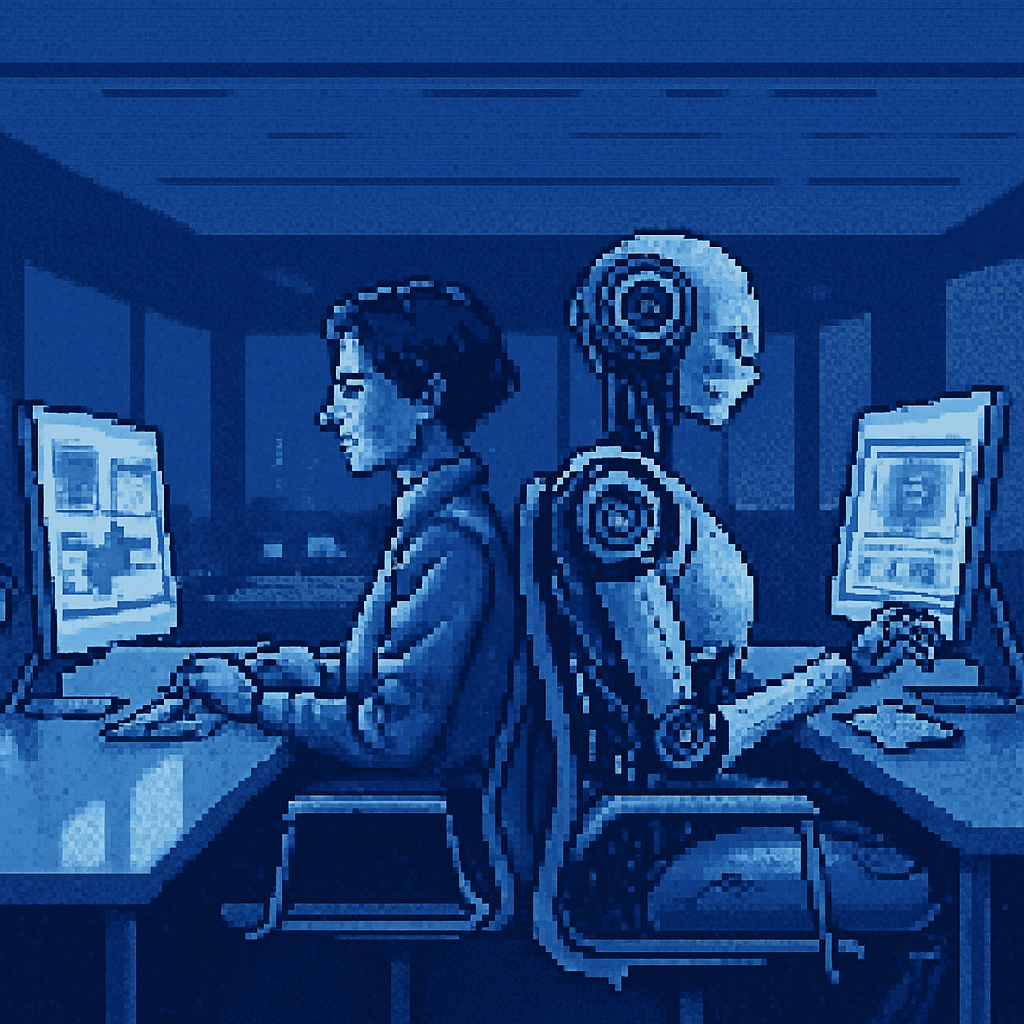
The Augmented Reality: AI as Collaborator, Not Conqueror
The familiar adage, "AI won't replace people—but people who use AI will replace people who don't," succinctly captures the paradigm shift. The IBM report powerfully reinforces this, revealing that a striking 87% of executives believe job roles are more likely to be augmented by Generative AI than entirely automated. This isn't about ceding ground to algorithms; it's about forging powerful human-machine partnerships.
"Augmented work" signifies a future where AI shoulders the burden of mundane, repetitive tasks, thereby liberating human intellect for endeavors that demand creativity, critical thinking, strategic foresight, and deep interpersonal engagement. This is not merely an efficiency play; it's a profound opportunity to elevate human potential.
The New Skillset Imperative: Beyond Technical Prowess to Human-Centric Mastery
The dawn of the Human-Machine Age brings with it an urgent call for recalibrating our understanding of essential skills. IBM's research indicates that an estimated 40% of the global workforce – a staggering 1.4 billion people – will require reskilling within the next three years due to AI and automation.
We are witnessing what IBM terms a "new skills paradigm." While technical literacy remains important, the report highlights a significant de-prioritization of traditional STEM skills in isolation, with competencies like effective time management, team collaboration, strong communication, adaptability, ethical integrity, and creativity surging to the forefront.
True mastery in the Human-Machine Age will lie in the synthesis of AI fluency with these critical people skills.
The Leadership Mandate: Architecting the Future of Symbiotic Work
Navigating this profound transformation demands visionary leadership. While four in five executives acknowledge Generative AI will reshape employee roles and skills, a mere 28% of CEOs had thoroughly assessed its potential impact on their workforce.
Leaders in the Human-Machine Age must transcend the role of mere technology adopters to become architects of augmentation. This involves proactively designing new workflows, reimagining job roles, and cultivating organizational structures that foster seamless human-machine collaboration.
The Quest for Purpose: The "Meaningful Work" Dividend
Perhaps one of the most compelling insights: when foundational needs like fair compensation and job security are met, 45% of employees identify "impactful work" as their top priority. This intrinsic human need appears to be a significant blind spot for many organizations, with only 23% of executives recognizing impactful work as such a high priority for their teams.
In the Human-Machine Age, as AI increasingly handles routine operations, the human yearning for meaning and contribution through work will only intensify. Organizations that fail to architect roles offering genuine impact and purpose will face challenges in talent retention and engagement.
Navigating the Transition: Actionable Imperatives
- Prioritize with Purpose (Human-Centric AI Strategy): AI adoption must be driven by a clear vision of how it will augment human capabilities and enable more impactful work.
- Lead with an Adaptive Operating Model: Static organizational charts are relics of a bygone era. Cultivate agility by continuously evolving operating models.
- Make Work More Rewarding (Engineer for Meaning): Design roles to leverage AI in ways that reduce drudgery and elevate strategic and creative aspects.
- Invest Holistically in Talent: Commit to continuous learning encompassing AI literacy, digital fluency, and critical human-centric skills.
Conclusion: Embracing Our Augmented Future with Intention
The Human-Machine Age is here. It promises a world where technology amplifies human ingenuity, where collaboration transcends the purely human, and where the nature of work itself can be reimagined to be more productive, innovative, and profoundly purposeful.
By embracing AI as a partner, by cultivating the uniquely human skills that will define our value, and by leading with a clear vision for a people-centric augmented future, we can ensure that the Human-Machine Age is one of unprecedented human achievement and fulfillment.
Source: IBM Institute for Business Value (2023). Augmented work for an automated, AI-driven world.
// TAGS
// ── ── ── ── ── ── ── ── ── ── ──
// END_OF_TRANSMISSION
// CO_AUTHORED: HUMAN + AI